Starting BJJ with Old Injuries: What to Know First
The short answer: yes, adults with old injuries can often start BJJ, but the safe way to start is with a conversation, not a sprint. The right approach to starting BJJ with old injuries looks like this: tell your coach what happened, get a professional opinion where your injury requires one, start slowly, and make tapping early a habit. This guide explains the parts of that process, and it is not medical advice.
This guide covers the general questions behind starting BJJ with old injuries. For the day-one details, read what to expect at your first BJJ class before you go.
Start with Your Own Health Information
You know more about your injury history than anyone at the gym. Write down what happened, when it happened, what still bothers you, and what your doctor or physical therapist has said. You do not need a binder of records. You need enough to describe your situation clearly to a coach and to a professional.
If an injury still causes sharp pain, limits your daily movement, or is under active treatment, talk to your doctor or physical therapist before starting a contact sport. That step is not optional, and no article should talk you out of it.
Tell the Coach Before the First Class
Contact the gym before your first class and describe your history plainly: the joint or area, the kind of injury, how long ago, and what feels limited today. A coach who knows your situation can pair you with patient partners, avoid movements that press on it, and show you modifications.
You can see whether a school handles this well before you pay anything. A useful early test: does the coach ask follow-up questions, or do they wave it off? How a gym responds to your health history tells you a lot about how they will coach you in month six.
Expect Class to Be Adjustable, Not Rigid
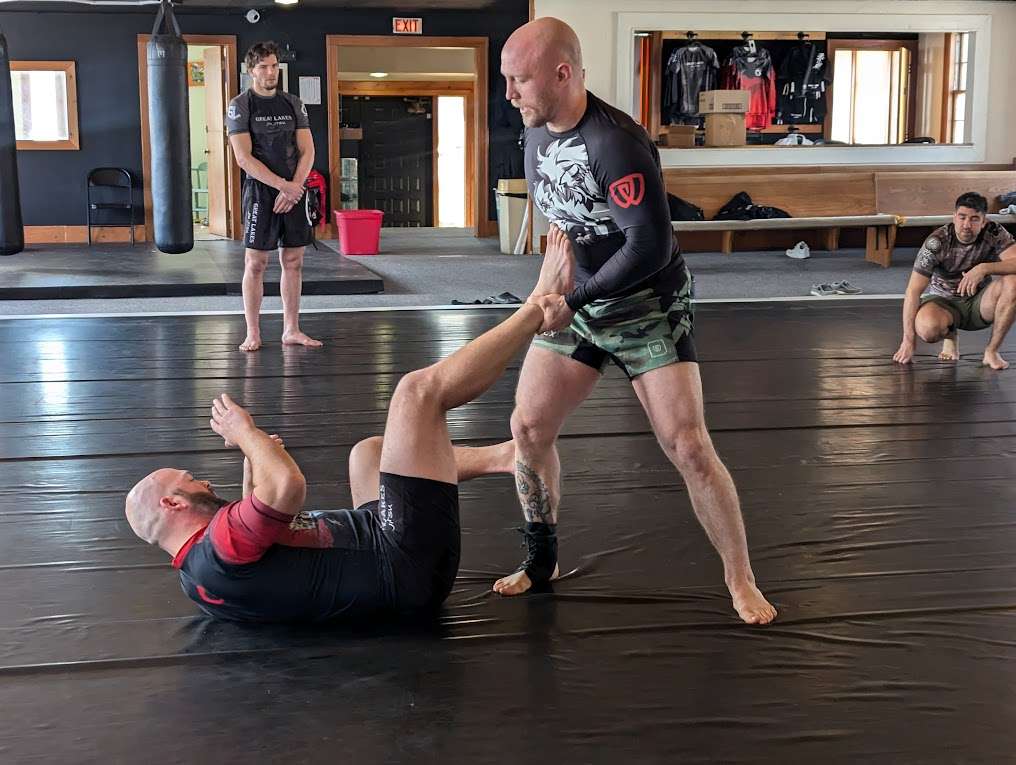
Most adult BJJ classes include drilling, technique repetition, and supervised practice rounds. Good coaches give beginners permission to modify: skip a movement, drill at half speed, or sit out the round. If a position hurts, you do not have to finish it.
Modified training is still training. A beginner scaling back a movement learns the same concept with less load, and that is how many adults with old injuries stay on the mat for years.
Make Tapping Early a Habit
In BJJ, tapping is how you signal that a position is too much. Many instructors teach beginners to tap early and often, before pain, before panic, and before pride matters. For someone with an old injury, that habit is the single most protective thing you can build.
You do not lose anything by tapping. Rounds restart, and you drill again. The people who keep training for decades are usually the ones who valued the next class over winning any single exchange.
The Knees, Back, and Joint Questions
Two of the most common adult concerns are knees and lower back. People who search about jiu jitsu with bad knees usually want to know whether class requires kneeling, gripping with the legs, or being underneath someone. The honest general answer is the same: it depends on the specific injury, and the person to decide is you with your doctor, talking to a coach who can show you the actual movements.
BJJ includes kneeling, gripping with the legs, and being underneath someone. Classes also include positional work where partners move cooperatively at low intensity. A qualified coach can explain which parts of a beginner class stress which joints, so you can weigh it with your professional before committing.
If you are deciding whether your body can handle class at all, our separate guide on whether you need to be in shape for jiu jitsu covers the fitness side of the same question.
How a Trial Helps You Decide
The best way to test how BJJ fits your body is to try a small number of classes with your coach aware of your history, then evaluate. A few sessions tell you things a website cannot: how the coach teaches, how partners respond, and how your body feels the next day.
That is exactly what a free trial exists for. You are not committing to years of training by trying one week of classes. If a school fits, the adult training program page explains how beginner classes are structured, and the live schedule shows the weekly class times.
Red Flags to Watch For
A few things should make you pause at any school:
- A coach who guarantees your injury will be fine.
- Pressure to ignore pain or to skip talking to a professional.
- Rolling with aggressive partners before you are ready.
- A gym that is unwilling to answer questions about your situation in advance.
None of these necessarily means a gym is bad. They mean the conversation should continue, and your caution should stay high.
Build the First Month in Stages
If you decide to start, structure your first month in stages: observe or meet the coach first, take class one with clear limits, add a second class the following week, and only increase intensity once you know how your body responds. Safe BJJ training for adults is not about avoiding contact forever. It is about adding load gradually with feedback.
Keep a simple note of how you feel after each class. That note, more than any advice, will tell you whether the pace is right.
Where Progress Comes From
Adults who start BJJ with old injuries and stay with it usually share the same pattern: they were honest about their history, they picked a patient coach, they tapped early, and they treated the practice as long-term. The people who get hurt are usually the ones who hid their history or tried to keep up with the hardest room on day one.
Your age and your history are not disqualifiers by themselves. They are information, and the more information your coach has, the better the plan you build together. If your doctor has cleared you to try a controlled, coached activity and a gym listens to your concerns, you have a reasonable path forward.
If you are in the Flint area and want to start that conversation, contact Great Lakes BJJ first, and the free 14-day trial is there for you once you are comfortable. If you would rather read first, the beginner jiu jitsu overview covers the full path from day one.