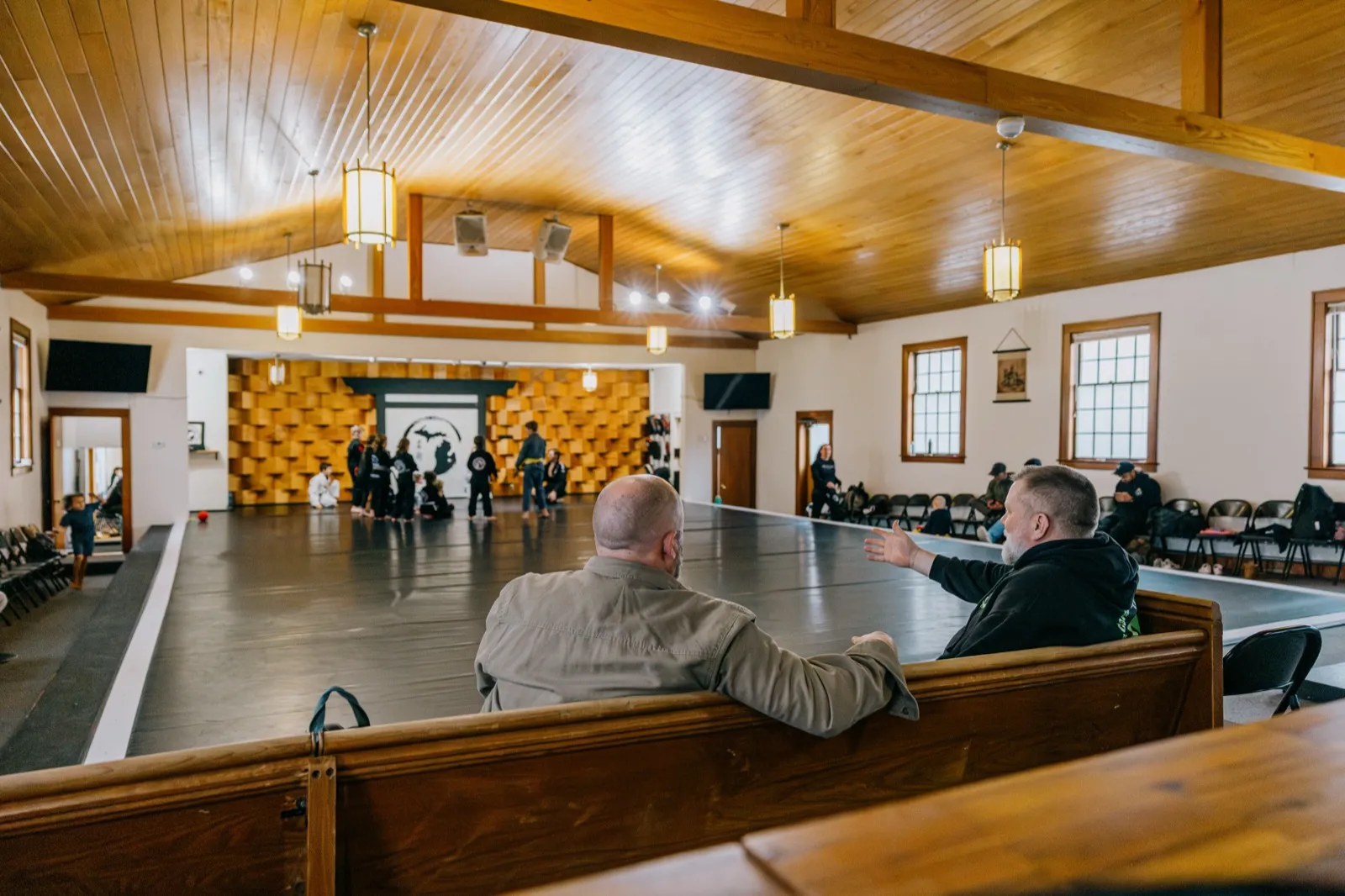
How to Choose a Kids' Martial Arts Gym in Flint
If you've enrolled your kid in an activity before that fizzled out after a few months, you already know the feeling you're trying to avoid. The sign-up fee, the gear, the schedule shuffle, and then the slow realization that it wasn't the right fit. Picking a martial arts gym for your child is a longer decision than most parents treat it as. Done right, it's a place they grow up in for years. Done wrong, it's another thing that didn't stick.
So here's the honest answer I give any parent who asks me what to look for. It's a three-question test, and the order matters. If a gym passes all three, it's a real place. If it fails any one of them, it's broken in a specific, predictable way.
Question 1: Is the gym actually teaching skills that work?
Not entertainment dressed up as martial arts. Real technique. There are places that keep kids busy with high-energy games and hand out stripes for showing up, and from the lobby it can look like progress. The test is whether your kid is actually learning to do something, or just being kept moving for forty-five minutes.
With jiu-jitsu specifically, you can see it. A kid who is being coached well starts to control positions, escape from bad spots, and finish techniques that hold up when another kid is genuinely resisting. That last part is the tell. Skills that only work when the partner cooperates aren't skills yet. We coach kids top-first on purpose, because being on top and on their opponent's back is where kids actually have success, win matches, and build confidence that's real instead of borrowed.
Question 2: Are the kids having fun?
This one gets dismissed as the soft question. It isn't. They're children. If they don't enjoy being there, they won't stay long enough for the skills to matter, and everything in question one becomes pointless.
But watch how a gym gets to fun, because there are two very different versions. One version is all games and play with no real skill underneath, which produces kids who like it and learn nothing. The other version treats fun and skill as both required, not as a trade-off. Kids drill techniques that actually work, the same high-percentage stuff the adults learn, scaled down for their age, and the class is built so they enjoy the process of getting good at it. Picking one side over the other is how kids' programs fail. You want the gym that refuses to choose.
Question 3: Are the kids becoming better people?
This is the one that separates a good gym from a great one. If a place is teaching real skills and the kids are having fun, but they're not growing as humans, something is off. That's a red flag, not a rounding error.
The parents who notice it usually aren't watching the mats. They're noticing their kid is calmer at school, more respectful at home, steadier with friends, better at losing without falling apart. The jiu-jitsu is the vehicle. The growth is the destination. When we coach a child, the technical stuff is real and it matters, but the deeper job is challenging them in a way that makes them more resilient as people. That's the actual product. A gym that produces technically sharp kids who are no steadier than when they started hasn't done the real work yet.
Why the order matters
Run the three in order and each failure has a signature. A gym with skills but no fun produces miserable kids who quit. A gym with fun but no real skills produces kids with false confidence, which is worse than none, because it cracks the first time it's tested. A gym with both but no character development produces competent kids who are still just kids. The work hasn't reached the thing you actually enrolled them for. All three, together, in that order.
How to use the test on your visit
You don't need to know anything about martial arts to run this test. You just need to watch one class with these three questions in your head:
- Skills: Is my kid learning to do something specific, or just being kept busy? Does it hold up when a partner resists?
- Fun: Are the kids engaged and enjoying it, or enduring it? And is the fun built on top of real skill, or instead of it?
- Character: Do the coaches care how these kids treat each other? Is there any sign this is about who the kid becomes, not just what they can do?
Then check the simplest signal of all, which is your own kid in the car afterward. Kids are honest about whether they want to go back.
What this looks like at Great Lakes
We built our kids' program around all three of those questions, and we're direct about it because the room is where it either shows up or it doesn't. Kelley runs the culture side of it. She's a 2022 world champion, and she's also an occupational therapist who specialized in early childhood development, which is a genuinely rare pairing. It's the reason kids can start with us as young as three. Coaching a three-year-old and coaching a competitive teenager are different jobs, and she does both without cutting corners on either.
The gym has been in Flint since 2016, we don't do belt-test fees or mandatory gear or long contracts, and you can read what other Flint-area families have said in our 100+ five-star Google reviews. But none of that is the point of this article. The point is the test. Take it to any gym you're considering, including ours. If a place can pass all three questions honestly, your kid is in good hands. If it can't, you'll know exactly which way it's broken before you sign anything.
There's a 14-day free trial waiting for your kid, no contracts and nothing to cancel. Come watch a class, let them get on the mats, and run the three questions yourself. If you want to talk it through first, message us.
See you on the mats,
Coach Adam