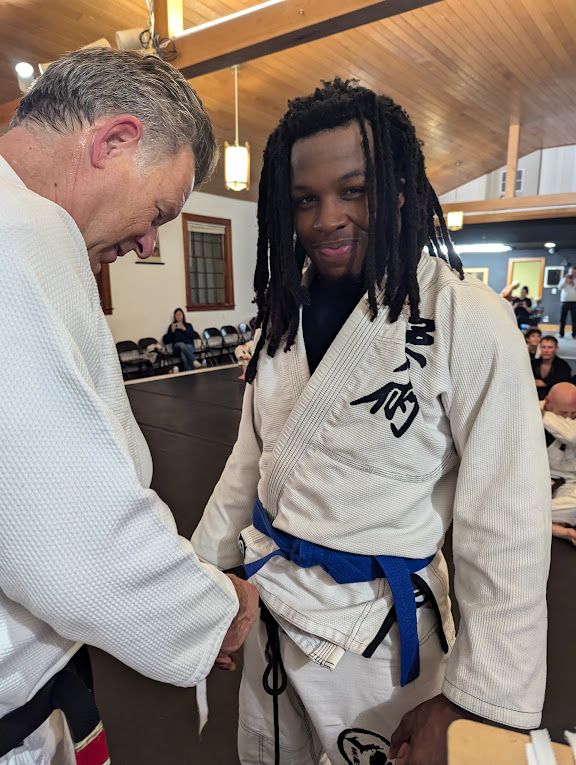
BJJ Belt System Explained: Order, Meaning, and Time
The short answer: the BJJ belt system explained in one line is this: white, blue, purple, brown, and black, in that order, with each belt meaning deeper skill and responsibility rather than time served. The Brazilian jiu jitsu belt order is the same in almost every school. How long to get a BJJ belt is the part nobody can promise, because promotion depends on skill, consistency, and each coach's standards.
This guide explains the belts, how promotions usually work, and the questions worth asking a coach. It does not promise timelines, and you should treat any school that does with caution.
The Belt Order Is Simple and Consistent
The order of ranks in Brazilian jiu jitsu is:
- White belt
- Blue belt
- Purple belt
- Brown belt
- Black belt
Beyond black belt, jiu jitsu uses degree bars on the black belt. The order above is standard worldwide, so learning it once covers almost every gym you will visit.
What Each Belt Means
Each belt reflects a stage of understanding, not a personality type:
- White belt: learning survival: escapes, basic positions, and how to move with a resisting partner.
- Blue belt: a working grasp of fundamentals and the ability to use them under pressure.
- Purple belt: a broad game with real depth, and the level many coaches consider a true instructor-in-training.
- Brown belt: refined technique and the final preparation stage for black.
- Black belt: complete fundamentals and the start of a new kind of learning, teaching others, and representing the art.
None of these definitions are official law. Schools differ in emphasis, but the rough meaning holds across jiu jitsu.
The Stripe System Comes Before Belts
Between belts, most schools use stripes: small white bars on the end of the belt. A student usually earns stripes on the way to the next belt, and four stripes is a common, though not universal, signal a promotion is close.
Stripes are not standardized. One school's stripe criteria can differ from another's, so the only reliable source for what a stripe means is the coach who awards it.
Kids and Adults Rank Separately
Children's programs commonly use a different belt ladder with more colors, including gray, yellow, orange, and green belts, before moving into the adult ranking system. An adult who sees a young student wearing these colors should not assume they are traditional adult ranks.
Kids' promotions often carry age-based structure. Adult ranking is the white-to-black ladder described above. If you are a parent comparing programs, it is worth asking how a school handles youth belts and what the path into the adult system looks like when a student ages up.
How Most Schools Decide Promotions
Promotion is normally a coach's decision, not an exam with a fixed score. Coaches weigh technical skill, ability to apply it against resistance, consistency in training, and how a student treats teammates. Attendance alone does not earn a belt.
Some schools hold formal belt tests, and some never test at all. Both are normal. The fair question is not which style is better, but what the school you train at actually does.
Why Nobody Can Promise a Timeline
People asking how long to get a BJJ belt usually want a number. The honest answer has no universal number. Blue belt commonly takes years for adults, and every belt after that takes longer still, but individual results span a wide range depending on training frequency, coaching, physical circumstances, and how quickly the skills actually land.
Any coach who quotes you a fixed month count for a belt is guessing about the future. A respectful school explains what it looks for, not when you will receive it. Rates of progress vary with age, prior athletic background, injuries, and the number of classes per week, so averages that sound precise are rarely useful for your specific situation.
What to Actually Track Instead of Belts
Belt color is a coarse signal. Early on, better measures of progress include:
- Surviving longer in practice rounds.
- Escaping positions that used to trap you.
- Remembering a technique from last week on your own.
- Feeling comfortable asking questions in class.
Beginners who track these habits enjoy the sport more and usually progress faster than students who stare at the belt rack. A simple training journal makes this concrete: one line after each class for what you drilled, what you struggled with, and one thing that went better than last time. After a month, that journal is better proof of progress than any color of fabric.
How to Ask a Coach About Belts Without Awkwardness
It is reasonable to ask what a school looks for before promotion. Straightforward phrasings include:
- What do you look for between stripes and belts?
- Do you use formal tests or coach assessment?
- What should I focus on in my first year?
How a coach answers these questions is information about the school. Vagueness about criteria is different from refusing to promise dates, and the latter is the honest behavior. If a coach happily explains what good training and good behavior look like, but refuses to predict your promotion month, that is a sign of a healthy culture.
The belt system is one of the first concepts beginners meet, but it is not the most important one. The vocabulary of the mat matters more in the first months: start with our beginner BJJ terms guide, pair it with a sensible training frequency, and if you are weighing whether starting late is worthwhile, our guide on starting jiu jitsu at an older age answers that directly.
The Bottom Line on Belts
The BJJ belt system is consistent in order and variable in pace. Belts mark skill and responsibility, not calendar time, and any school that guarantees a timeline is overpromising. Find a coach whose teaching style fits you, ask about criteria openly, and let the belt arrive as a focus side effect of consistent training.
Your belt arrives as a side effect of consistent training. If you want to see how one Flint gym runs its classes and ranking questions in person, try the free 14-day trial at Great Lakes BJJ, check the live schedule, or book a visit and ask directly. The adult training page explains how classes and rankings work here, and the beginner jiu jitsu overview covers what a new student should know first.